

Rhinoplasty: A Journey Through History
Rhinoplasty, sometimes called a nose job, may seem like a modern luxury in cosmetic surgery. However, its history dates back to ancient civilizations, showcasing a fascinating journey filled with innovation and cultural significance. The origins of rhinoplasty can be traced back over two thousand years, especially to Sushruta’s writings from around 600 BCE. This procedure was not just cosmetic; it played a vital role in restorative surgery to correct deformities caused by injuries or diseases.
As we explore the history of rhinoplasty, we find a narrative that includes:
- Techniques of ancient Egyptians
- The development of closed rhinoplasty in the late 19th century
- Societal shifts regarding aesthetics and self-image over time
Understanding this evolution is key. It reveals not only the technical advancements achieved in the field but also how society’s attitudes towards beauty have changed across cultures and eras. This article invites readers to appreciate the long-standing importance of rhinoplasty in enhancing and restoring human appearance.
Ancient Rhinoplasty Techniques
Sushruta’s Contributions
Ancient rhinoplasty techniques, particularly those developed by Sushruta in India, have significantly influenced modern nasal reconstruction. Sushruta, often regarded as the “father of plastic surgery,” detailed these methods in the “Sushruta Samhita,” a seminal medical text from around 600 BCE.
Sushruta’s Rhinoplasty Technique:
Sushruta’s procedure involved measuring the nasal defect using a leaf, then harvesting a skin flap from the cheek or forehead to reconstruct the nose. The nasal stump was prepared by scarifying it, and the skin flap was carefully positioned and sutured. To maintain the shape of the nostrils and ensure patency, hollow tubes made from the castor oil plant were inserted. Postoperative care included the application of medicinal powders and oils to promote healing.
This method is described in the “Sushruta Samhita” as follows:
“The portion of the nose to be covered should be first measured with a leaf. Then, a piece of skin of the required size should be dissected from the living skin of the cheek and turned back to cover the nose, keeping a small pedicle attached to the cheek.” (Hektoen International)
Cultural and Historical Context
In ancient Indian society, the nose symbolized honor and dignity. Nasal mutilation was a common punishment for crimes like adultery, leading to both physical disfigurement and social ostracism. Sushruta’s rhinoplasty techniques provided a means for individuals to restore their appearance and social standing.
“Restoration of the nose is equal to returning social honor.” (ENT & Audiology News)
Transmission and Influence
Sushruta’s methods were translated into Arabic during the Islamic Golden Age and became known as the “Indian method.” This knowledge spread to Persia and later reached Europe, influencing surgical practices there. In the 18th and 19th centuries, British colonial surgeons observed Indian physicians performing rhinoplasty using the forehead flap technique, which was subsequently adopted into European medical practice.
Ancient Egyptian Practices
While the “Edwin Smith Papyrus,” an ancient Egyptian medical text dating back to 3000–2500 BCE, describes treatments for nasal injuries, these methods primarily involved simple manipulations and the use of absorbent materials like linen. There is no substantial evidence to suggest that ancient Egyptians developed surgical rhinoplasty techniques comparable to those of Sushruta.
In summary, Sushruta’s pioneering work in nasal reconstruction laid the foundation for modern rhinoplasty, with his techniques being disseminated and adapted across various cultures over the centuries.
| Era/Period | Technique | Region | Notable Advancements |
|---|---|---|---|
| 600 BCE | Skin Flap Reconstruction | India | Introduced by Sushruta, utilizing cheek/forehead flaps for reconstruction. |
| 16th Century | Use of Autografts | Europe | Use of skin grafts from other body parts to address syphilis-induced deformities. |
| Late 19th Century | Closed Rhinoplasty | Germany | First closed technique performed by Dr. John Orlando Roe, minimizing visible scarring. |
| Early 20th Century | Open Rhinoplasty | USA | Implementation of direct visualization techniques, leading to improved precision. |
| Post-WWI | Reconstructive Techniques | Worldwide | Advances due to reconstructive needs for war injuries; use of innovative surgical tools. |
| 21st Century | Minimally Invasive Techniques | Global | Incorporation of endoscopic methods and improved anesthesia, enhancing recovery and outcomes. |
19th Century Advancements in Rhinoplasty
The 19th century marked a pivotal period in the evolution of rhinoplasty, transitioning it from rudimentary techniques to more sophisticated surgical interventions. A key milestone in this journey occurred in 1887 when Dr. John Orlando Roe, an American surgeon, performed the first closed rhinoplasty. This groundbreaking procedure redefined nasal surgery by allowing for internal corrections without leaving visible external scars, thus enhancing both cosmetic outcomes and patient recovery.
Dr. Roe’s closed rhinoplasty technique relied on accessing the nasal structures through the nostrils, employing incisions hidden within the nasal cavity. This innovative approach minimized surgical trauma and expedited healing, as patients experienced significantly reduced downtime compared to earlier methods that often resulted in conspicuous scarring. Roe’s contributions did not just lie in technique but also in broadening the medical community’s understanding of aesthetic surgery’s role in restoring both form and function to the nose.
The advancements instigated by Roe prompted a shift in societal perceptions of nasal surgery. Previously viewed as a last resort or a method solely for reconstructive purposes, rhinoplasty began to gain traction as a legitimate form of cosmetic enhancement. This paradigm shift reflected a growing cultural embrace of aesthetic considerations in medicine, ultimately paving the way for the prevalence of cosmetic surgery in the 20th century.
Following Roe’s pioneering work, the closed rhinoplasty technique laid the groundwork for further innovations in rhinoplasty. It inspired subsequent generations of surgeons to refine their techniques, leading to an expanded repertoire of options for patients seeking both restorative and cosmetic nasal surgery. By demonstrating that nasal surgery could achieve aesthetically pleasing results with minimal visibility, Dr. John Orlando Roe not only transformed surgical practices but also altered the trajectory of cosmetic surgery as a whole.
The Influence of WWI and WWII on Rhinoplasty Techniques
The impact of World War I (WWI) and World War II (WWII) on rhinoplasty techniques cannot be overstated, as these global conflicts prompted drastic advancements in the field of reconstructive surgery. The requirement for innovative surgical solutions stemmed from the grievous facial injuries sustained by countless veterans, which demanded new techniques and approaches to restore functionality and appearance.
World War I
During WWI, the emergence of modern weaponry resulted in severe facial wounds for many soldiers. Surgeons such as Sir Harold Gillies emerged as pioneers in reconstructive surgery, particularly for nasal reconstruction. Gillies was instrumental in developing the “tubed pedicle” technique, which involved creating a skin flap that maintained its blood supply while being transferred to cover facial defects. This method not only advanced aesthetic outcomes but also reduced the risk of infection—a critical consideration for the injuries sustained during the war.
Additionally, sculptors like Anna Coleman Ladd created custom masks for veterans with facial disfigurements, providing them with a semblance of normalcy and aiding in their reintegration into society (Wikipedia: Anna Coleman Ladd).
World War II
Following the advancements of WWI, WWII presented further challenges that necessitated the evolution of existing surgical methods. Surgeons like Sir Harold Gillies and his cousin, Archibald McIndoe, refined surgical techniques and introduced innovations, such as the “walking-stalk skin flap,” which enhanced the success of skin grafting procedures for extensive nasal injuries (The National WWII Museum).
Specialized centers, such as the Valley Forge General Hospital, were established to focus on treating soldiers with facial injuries, combining physical reconstruction and psychological support to assist veterans in their recovery (The National WWII Museum).
Lasting Legacy
The techniques developed during the World Wars laid a robust foundation for modern plastic and reconstructive surgery. Many of the innovations introduced at this time remain in practice today, showcasing how the necessity to address the profound impacts of war on the human body spurred significant developments in medical procedures, including rhinoplasty. This evolution reflects a commitment to restoring not just the physical appearance of those injured but also their sense of identity and dignity.
In conclusion, the conflicts of WWI and WWII significantly influenced the trajectory of rhinoplasty and reconstructive surgery, reshaping the field through necessity and innovation, all while providing a pathway towards contemporary surgical practices that prioritize patient care and aesthetic results.
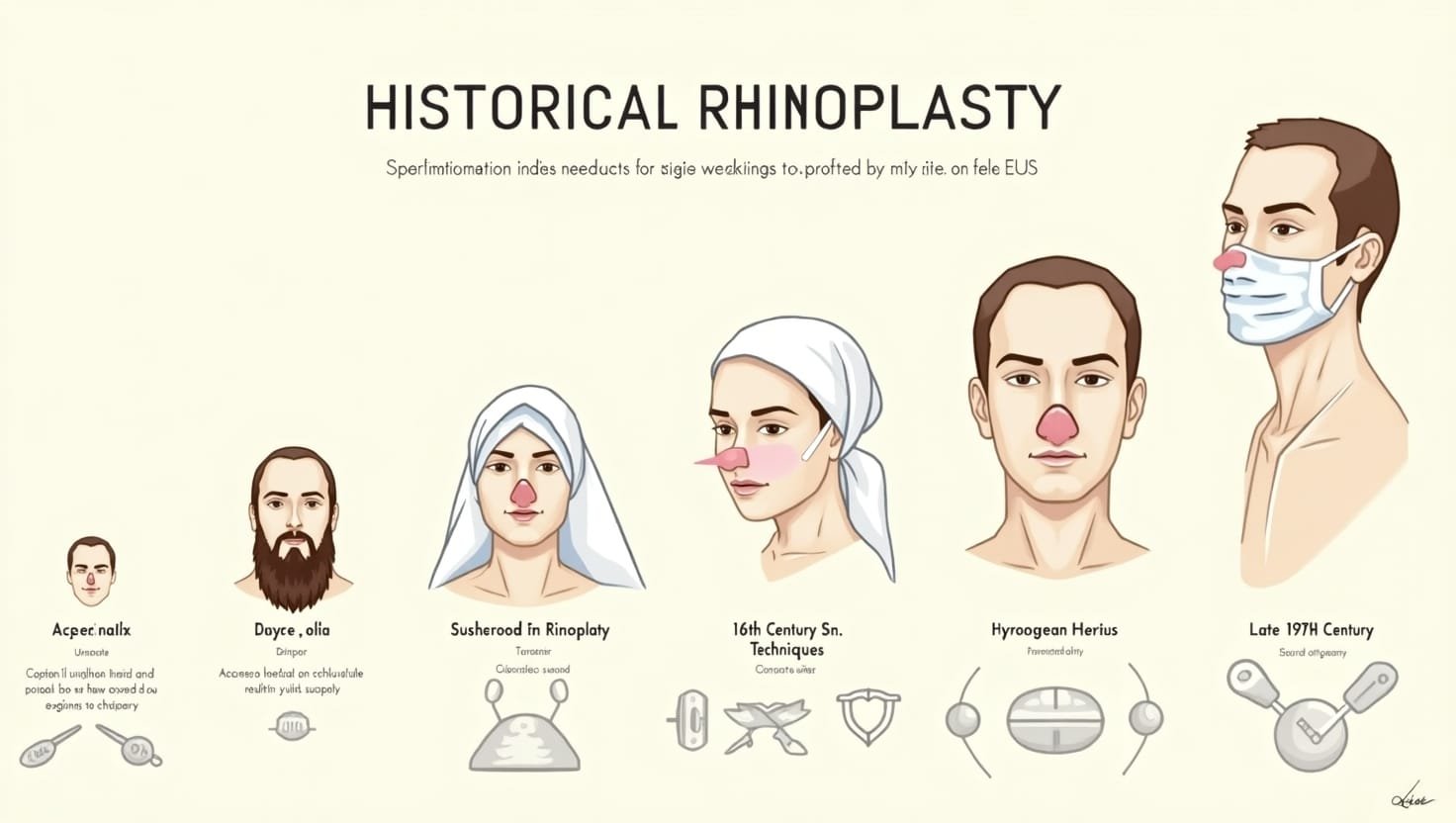
Modern Rhinoplasty Techniques
Modern rhinoplasty has evolved significantly, incorporating advanced techniques and technologies to enhance both aesthetic and functional outcomes. The primary surgical approaches are the closed (endonasal) and open (external) methods, each with distinct advantages.
Closed Rhinoplasty:
In this approach, all incisions are made within the nostrils, avoiding external scars. This technique preserves the columella and maintains the three-dimensional integrity of the nasal structure. It is often preferred for patients requiring minor modifications, as it is less invasive and typically results in reduced swelling and a quicker recovery period.
Closed versus open rhinoplasty
Open Rhinoplasty:
This method involves a small incision across the columella, allowing the surgeon to lift the nasal skin and gain direct visibility of the underlying structures. The open approach is particularly beneficial for complex cases requiring extensive reshaping, as it provides enhanced visualization and precision. However, it may lead to a longer recovery time and the potential for a small, visible scar.
Closed versus open rhinoplasty
Technological Advancements:
-
Ultrasonic (Piezo) Rhinoplasty: Utilizing piezoelectric instruments, this technique employs ultrasonic vibrations to precisely cut and shape nasal bones while sparing surrounding soft tissues. This results in less trauma, reduced swelling, and a smoother recovery compared to traditional methods.
The Latest Innovations in Rhinoplasty -
Laser Technology: Lasers offer precise tissue cutting and shaping, making procedures less invasive. They can seal blood vessels instantly, reducing intraoperative bleeding and promoting faster healing.
Technological Advancements and Methods in Rhinoplasty -
3D Imaging and Simulation: Advanced imaging allows patients to visualize potential outcomes before surgery, facilitating better communication between the patient and surgeon and aiding in meticulous surgical planning.
The Latest Innovations in Rhinoplasty
Contemporary Practices Compared to Historical Methods:
Historically, rhinoplasty techniques were more invasive, often focusing on reduction methods that could compromise nasal function. The closed approach was predominant until the late 20th century when the open approach gained popularity due to its improved visualization and precision. Modern practices emphasize preservation rhinoplasty, which aims to maintain as much of the natural nasal structure as possible, leading to more natural-looking results and fewer complications. Additionally, the integration of minimally invasive technologies has transformed rhinoplasty into a procedure with enhanced safety, reduced recovery times, and improved patient satisfaction.
Preservation Rhinoplasty: A New Rhinoplasty Revolution
In summary, the evolution of rhinoplasty reflects a shift towards techniques that prioritize structural preservation, precision, and patient-centered outcomes, distinguishing modern practices from their more invasive historical counterparts.
Incorporating techniques such as nasal reconstruction and nose surgery has continuously shaped the field, making it easier for practitioners to address both functional and cosmetic needs effectively. As we delve into these modern methodologies, it becomes evident that ongoing education and adaptation to technological advancements will enhance the quality and effectiveness of rhinoplasty treatments.

In conclusion, the evolution of rhinoplasty illustrates a remarkable journey that spans thousands of years, showcasing an incredible transformation from ancient practices to modern innovations. From the foundational techniques developed by Sushruta in 600 BCE to the substantial advancements seen during and after the World Wars, each era has contributed significantly to refining and enhancing the techniques available today. Understanding this historical context not only sheds light on the technical evolutions—such as the transition from closed to open rhinoplasty and the incorporation of minimally invasive technologies—but also emphasizes the growing cultural acceptance of aesthetic surgery.
As we look towards the future, the field of rhinoplasty continues to promise further advancements, with a focus on patient safety, improved functional outcomes, and tailored aesthetic solutions. This ongoing evolution serves as a testament to the resilience and creativity of medical practitioners dedicated to improving the lives of those seeking both restorative and cosmetic enhancements.
However, beyond the surgical advancements lies a narrative intertwining personal and societal implications. Rhinoplasty reflects not just individual desires for enhanced aesthetics but also mirrors increasingly changing beauty standards, wherein cosmetic surgery has become normalized within contemporary culture. This shift has profound psychological effects, as individuals find that their appearance can significantly influence self-esteem and personal identity.
A patient who underwent rhinoplasty shared, “I couldn’t be happier with the level of care provided by Dr. Deeb. Thank you, Dr. Deeb, for making this dream come true. I am forever grateful!” This sentiment encapsulates the emotional journey many patients experience, underlining how rhinoplasty can rejuvenate lives.
As the field continues to evolve, future innovations may further transform how rhinoplasty is approached, ensuring that it remains a vital aspect of both cosmetic and reconstructive surgery for years to come.
