
Facelift and Deep Plane Facelift: A Complete Guide for Patients Considering Treatment Abroad
Introduction: Why Many Patients Look Beyond Their Home Country
For many individuals in the UK, Europe, or North America, the decision to consider facial surgery abroad begins with questions rather than intentions.
Questions about technique. About natural results. About whether modern facelift surgery can restore facial structure without creating an artificial appearance.
Long waiting times, limited access to surgeons who specialize only in facial procedures, and confusion about different surgical methods often lead patients to research options internationally.
Understanding what a facelift actually treats — and how techniques differ — is the first step toward making an informed, safe decision.
What Is a Facelift?
A facelift is not simply a skin-tightening procedure.
It is a structural operation designed to reposition facial tissues that have shifted downward over time due to aging, gravity, and loss of elasticity.
Rather than changing how someone looks, the goal is to restore:
Definition along the jawline
Natural cheek position
Smooth transition between lower eyelid and cheek
Reduction of deep folds around the mouth
A more rested, balanced facial appearance
A properly planned facelift respects facial identity while addressing anatomical changes.
Who May Benefit From a Facelift?
Facelift surgery is typically considered when non-surgical treatments no longer provide meaningful improvement.
Patients often notice:
Sagging of the midface or cheeks
Loss of jawline contour
Deep nasolabial folds
Early neck laxity
A tired appearance despite feeling well
These changes occur beneath the skin — which is why surface treatments alone cannot correct them.
Types of Facelift Techniques and How They Differ
Understanding the differences between techniques is essential because each addresses a different anatomical layer.
Traditional (SMAS) Facelift
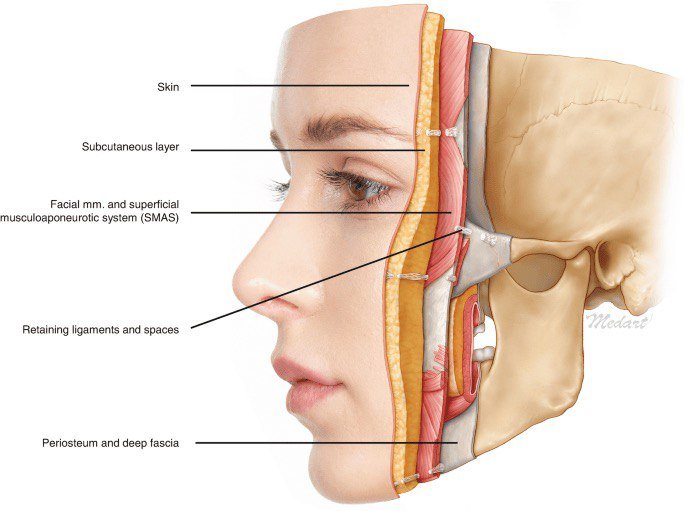
Focuses on tightening the SMAS layer beneath the skin.
Improves contour but may rely partly on skin redraping.
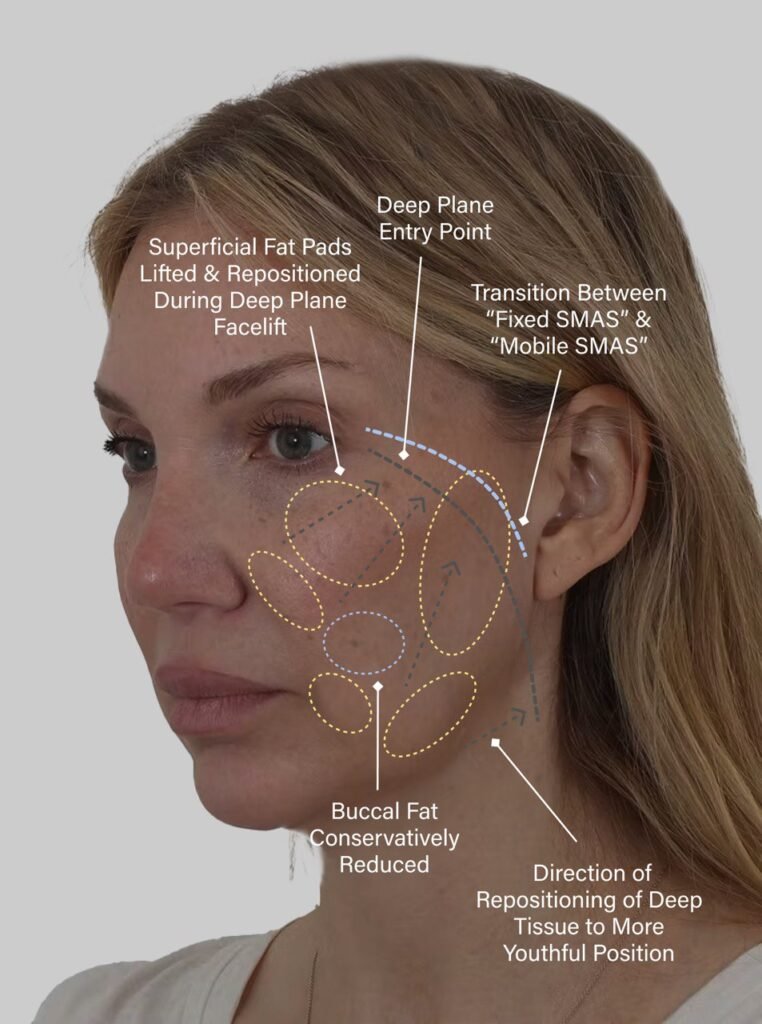
Deep Plane Facelift
Releases and repositions deeper facial structures as one unit.
Addresses midface descent directly rather than pulling tissue upward.
Mid Facelift
Targets cheek elevation specifically and is sometimes combined with other procedures.
Temporal Lift
Improves early sagging of the outer brow and upper cheek region.
Each technique has a role — the key is choosing the right method for the individual anatomy rather than applying a single standardized approach.
What Makes the Deep Plane Facelift Different?
The deep plane facelift works at a structural level rather than a superficial one.
Instead of tightening skin, the surgeon:
Releases facial retaining ligaments
Repositions muscle and fat layers together
Restores cheek volume naturally
Avoids tension that can create a “pulled” look
Why Patients Travel Abroad for Facelift Surgery
Patients rarely travel for surgery based on cost alone.
More often, they are seeking access to specialization.
Common motivations include:
Access to Surgeons Focused Exclusively on the Face
Facial-only practice allows deeper familiarity with complex anatomy and aging patterns.
Availability of Advanced Techniques
Not all surgeons perform deep plane or extended midface procedures routinely.
Shorter Waiting Periods
Elective surgery scheduling may be significantly faster.
Structured International Patient Programs
Many specialized clinics coordinate consultation, surgery, and early recovery within a defined treatment window.
How to Choose a Surgeon Abroad Safely
Safety depends on verification, not marketing claims.
Patients should confirm:
Board certification relevant to facial plastic surgery
Hospital-based operating environment
Documented experience in the proposed technique
Detailed consultation discussing risks and expectations
Structured aftercare planning
It is reasonable to ask questions. Responsible providers expect them.
The Treatment Journey: What to Expect
Understanding the process helps patients plan realistically.
Consultation Phase
Medical evaluation, photography, and discussion of goals determine suitability.
Arrival and Preoperative Assessment
In-person examination confirms the surgical plan.
Surgery
Performed in a hospital setting under controlled anesthesia conditions.
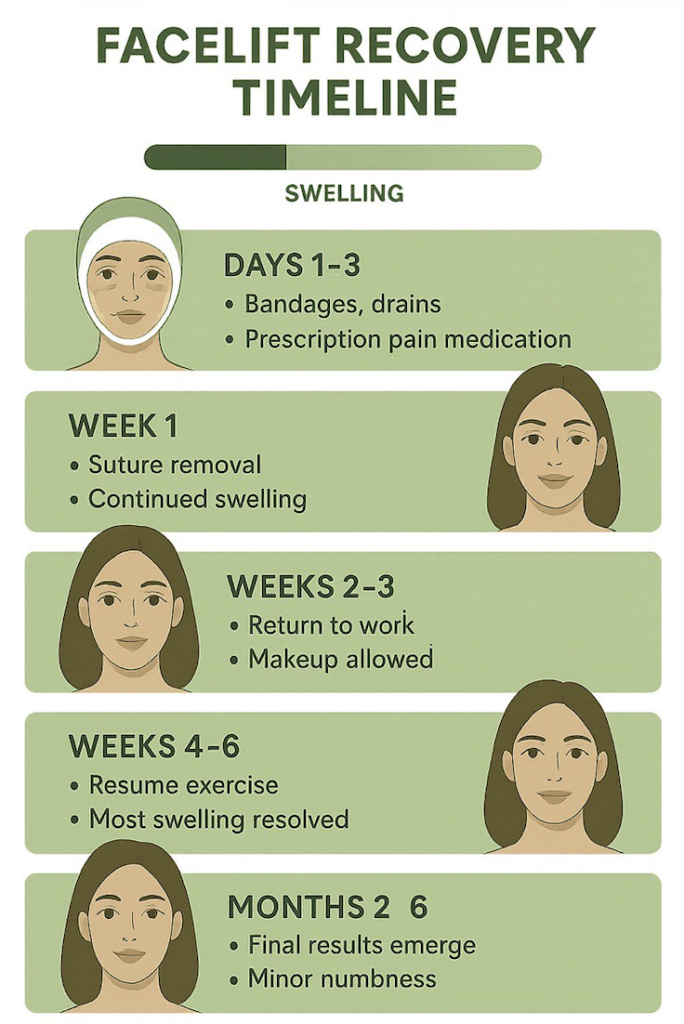
Early Recovery (First Week)
Swelling and tightness are expected; monitoring ensures proper healing.
Return Home
Most patients travel after the initial recovery phase with continued follow-up.
Why Pricing Differs Between Countries
Differences in pricing are influenced primarily by healthcare structure, including:
Facility operational costs
Staffing and administrative systems
Insurance frameworks
Currency and economic variation
Practice specialization volume
These factors explain international variation without reflecting differences in surgical intent.
Frequently Asked Questions
Is it safe to have facelift surgery abroad?
Yes, when performed by a qualified surgeon in an accredited hospital with proper follow-up care.
How long should I stay after surgery?
Patients typically remain 7–10 days for early healing and medical review.
Will I look different?
Modern techniques aim to restore structure rather than alter identity.
What if I have concerns after returning home?
Reputable clinics provide structured follow-up and remain involved in postoperative care.
Is deep plane facelift suitable for everyone?
No. Technique selection depends on anatomy, degree of aging, and patient goals.
How do I evaluate a clinic properly?
Focus on credentials, surgical environment, and transparency — not promotional messaging.
Making an Informed Decision
Facial surgery is a personal decision that should be made with time, information, and professional guidance.
Understanding the differences between techniques, verifying qualifications, and choosing a surgeon experienced in facial anatomy are far more important than where the procedure is performed.
Patients who take a careful, research-based approach tend to feel more confident and prepared — wherever they ultimately choose to undergo treatment.
